
Joseph Pilates did not call his method Pilates. He called it Contrology, and the name tells you what he cared about. In Return to Life Through Contrology, published in 1945, he laid out thirty-four mat exercises in a fixed order, beginning with the Hundred and ending with the Push Up. Every one of them asks for the same four things: control, precision, breath, and movement that flows out of your centre rather than from your limbs.
Eighty years later that still holds up, and for a reason worth naming. Most exercise asks you to produce force. Classical Pilates asks you to produce force in a particular way, through a spine that articulates and a centre that holds while the arms and legs do the work. That is a harder skill, it transfers to ordinary life more directly, and it is almost impossible to learn from a screen.
Below are ten of the most recognisable exercises in the classical mat repertoire. They appear here in their relative order within that sequence, which is not an accident and is explained in the next section. This is a selection of iconic exercises, not a ranking of the best ones.
What makes classical Pilates different
Three things. The repertoire is a fixed system rather than a pool of movements to draw from. The exercises run in a set order, so each one prepares the body for the next. And the mat work sits alongside a full set of apparatus that Joseph Pilates designed himself, each machine built to solve a specific problem.
Contemporary and hybrid styles borrow from that vocabulary and rearrange it, often blending in physiotherapy concepts or newer fitness thinking. Plenty of that work is thoughtful and plenty of excellent teachers do it. The difference is structural rather than moral: the classical order is itself a training device, and when exercises are pulled out of it they do less. There is a fuller account of that in what classical Pilates actually means.
1. The Hundred
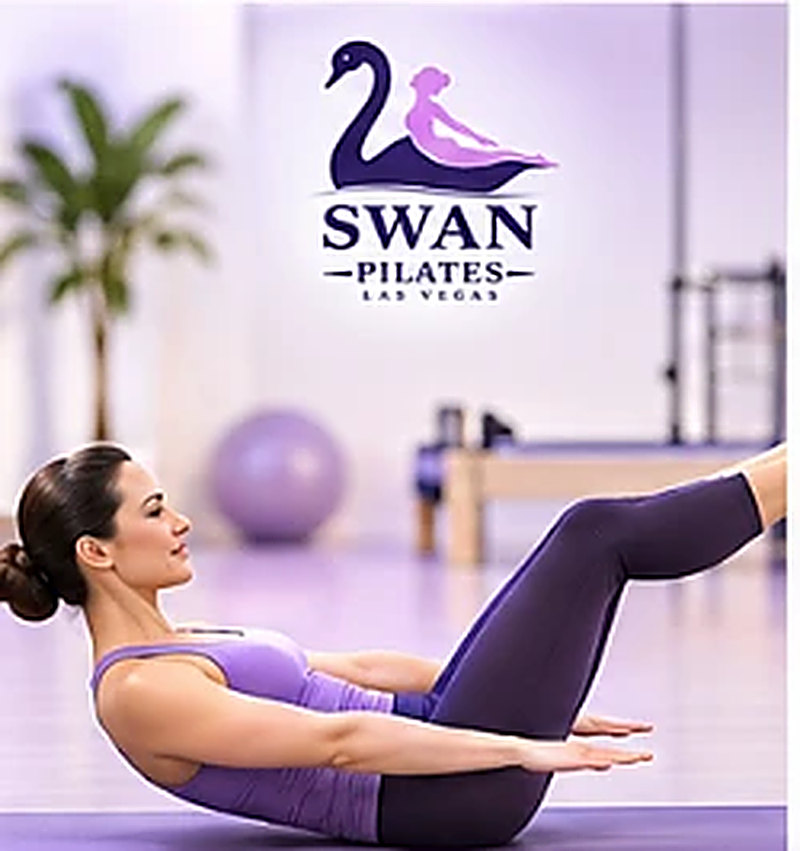
What it is. The opening exercise of the mat order, and the one that sets up everything after it. One hundred arm beats across ten breath cycles, with the head and chest lifted throughout.
How to perform it. Lie on your back, legs together and extended at roughly forty-five degrees, arms long by your sides and lifted a few inches off the mat. Curl the head and upper chest forward until you can see your own legs, with the lower back staying in contact with the mat. Beat the arms a short distance up and down from the shoulder, not the elbow. Inhale over five beats, exhale over five beats, and repeat ten times. The legs and torso should not move at all; only the arms and the breath.
Benefits. Builds endurance in the deep abdominals, trains breathing under load, and establishes the upper-body curl that half the repertoire depends on.
Common mistakes. Lifting from the neck instead of the ribs, so the chin juts and the shoulders bunch. Letting the lower back arch away from the mat, usually because the legs are too low. Beating from the elbow, which turns a centre exercise into an arm exercise.
Beginner modifications. Bend the knees to a table-top position, or keep the feet on the mat entirely, and start with twenty or forty beats. Raising the legs higher reduces the demand; lowering them increases it.
Difficulty. Beginner in its modified form, genuinely demanding at full extension.
Why one to one helps. Leg height is the dial that decides whether this exercise builds your centre or strains your back, and it is different for every person. In a private hour that height gets set for you and changed as you get stronger.
2. The Roll Up
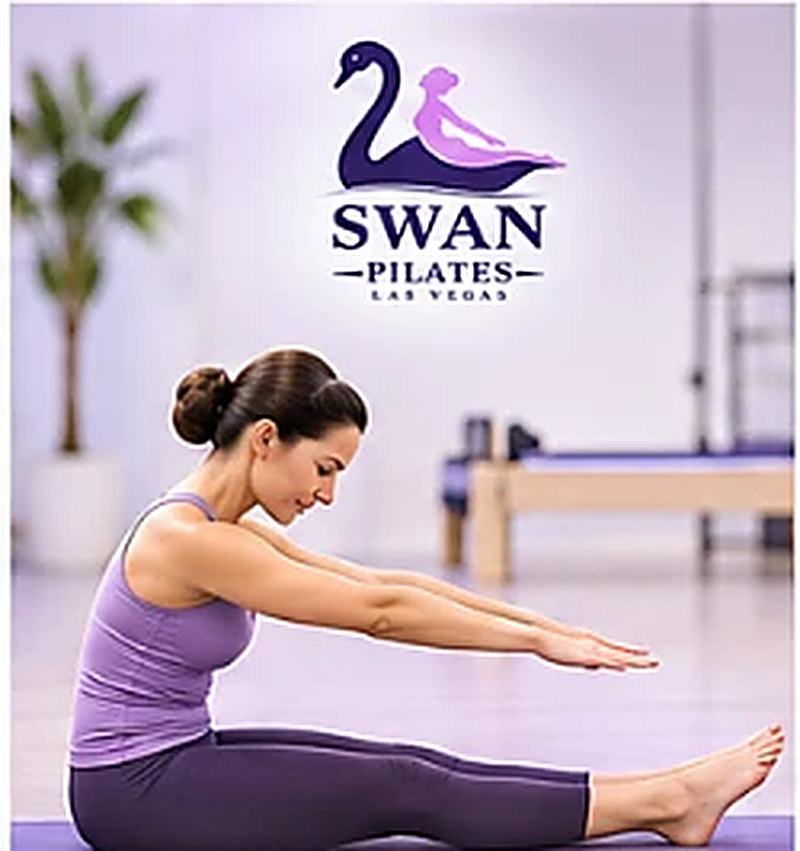
What it is. A slow, articulated sit-up that asks the spine to move one segment at a time in both directions.
How to perform it. Lie flat with the legs together and the arms reaching overhead. Bring the arms toward the ceiling, nod the chin, and roll up sequentially through the spine, reaching forward over the legs. Then reverse it, lowering the pelvis, the lower back, the mid back and finally the head, placing each part of the spine down in turn. Inhale to begin the lift, exhale through the roll up, inhale at the top, exhale on the way down. Keep it continuous and slow.
Benefits. Spinal articulation, abdominal strength through a long range, and hamstring length at the top of the movement.
Common mistakes. Using momentum, which is the most common of all and skips the work entirely. Letting the feet lift off the mat. Rolling up and down as one rigid block rather than segment by segment.
Beginner modifications. Bend the knees, hold a strap or the backs of the thighs, or practise only the lowering half, which is easier to control. Working on an inclined surface also helps.
Difficulty. Intermediate. Many people cannot do it unassisted at first, and that is normal rather than a failure.
Why one to one helps. This is the exercise where compensation is easiest to hide. An instructor watching closely can see the exact segment where your spine stops articulating and work on that, which no general cue reaches.
3. Single Leg Circle
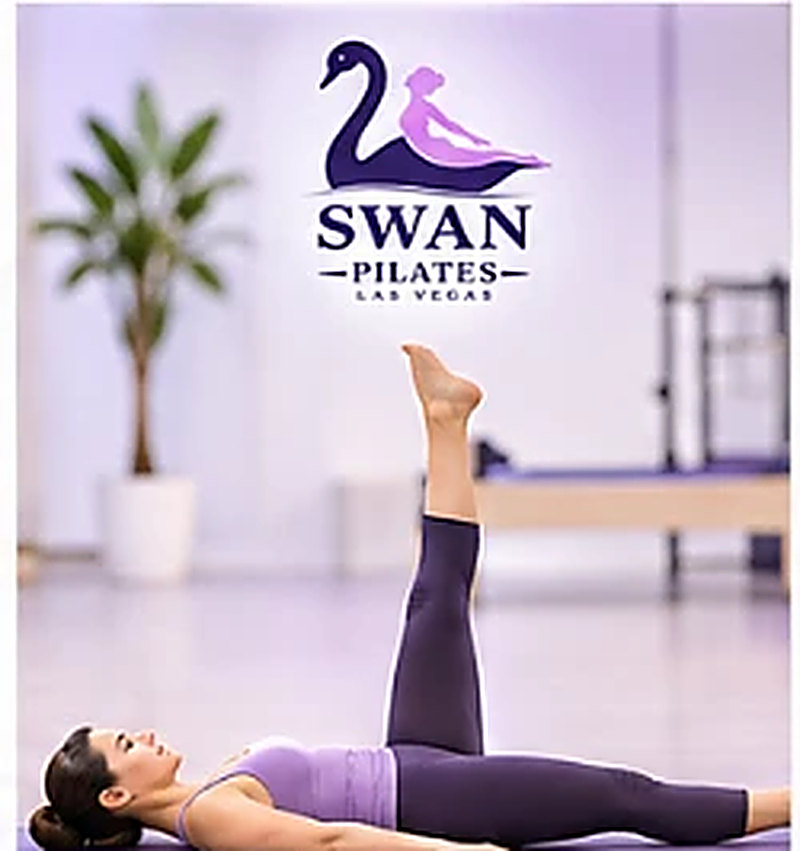
What it is. One leg draws a circle in the air while the pelvis refuses to move. A hip mobility exercise that is really a stability exercise.
How to perform it. Lie flat, one leg extended along the mat, the other reaching toward the ceiling. Circle the raised leg across the body, down, out and back up to the start, keeping the circle small enough that both hips stay level and anchored. Five circles in each direction, then change legs. Inhale as the leg crosses and descends, exhale as it returns.
Benefits. Hip joint mobility, pelvic stability, control of the deep hip and abdominal muscles working together.
Common mistakes. Making the circle too large, so the pelvis rocks and the exercise stops training what it is for. Gripping the front of the hip. Letting the supporting leg roll outward.
Beginner modifications. Bend the supporting leg with the foot on the mat, bend the moving knee, or make the circle very small. Range is earned here, not assumed.
Difficulty. Beginner, with the caveat that a small accurate circle is worth more than a large sloppy one.
Why one to one helps. Hip history varies enormously between people, and a replacement, an impingement or an old injury changes what range is appropriate. That is a judgement call, not a cue.
4. Rolling Like a Ball
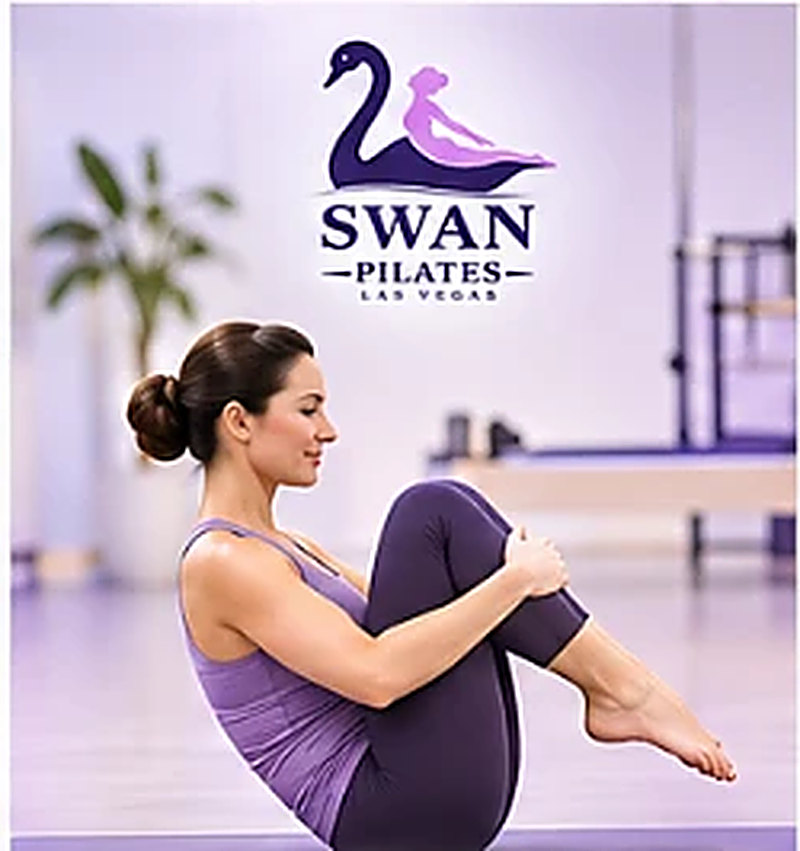
What it is. A rocking massage for the spine that doubles as a test of whether you can hold a shape while moving.
How to perform it. Sit balanced just behind the sitting bones, knees drawn in, hands holding the ankles or shins, heels close to the body, head curled toward the knees. Inhale and roll back to the shoulder blades, then exhale and roll back up to balance without letting the feet touch down. The shape of the body never changes; only its position does.
Benefits. Spinal mobility, abdominal control, balance, and the coordination to arrive at a still point rather than crash into it.
Common mistakes. Throwing the head to generate momentum. Letting the knees drift away from the chest, which flattens the shape and kills the roll. Rolling onto the neck instead of stopping at the shoulder blades.
Beginner modifications. Practise the balance alone without rolling, or hold behind the thighs. People with any neck sensitivity should have this one assessed before attempting it.
Difficulty. Beginner to intermediate.
Why one to one helps. Rolling exercises are the clearest case where a supervised first attempt matters. An instructor can hold the shape for you on the first few repetitions so you feel the right thing rather than guess at it.
5. Single Leg Stretch
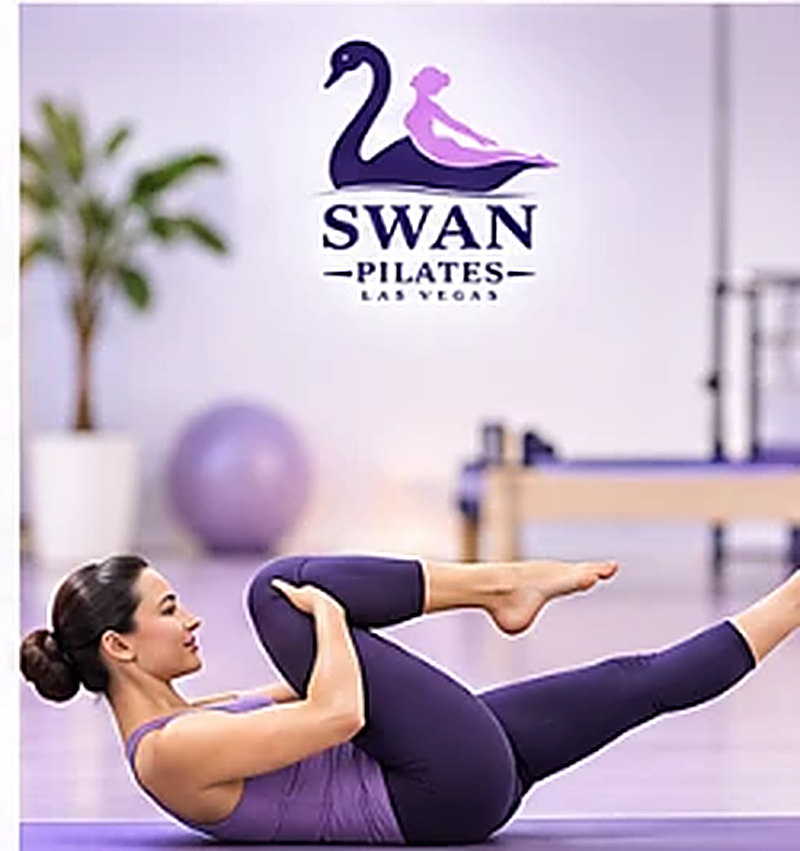
What it is. The first of the stomach series, and one of the most useful exercises in the whole method for learning to stay stable while the legs move independently.
How to perform it. Lie on your back with the head and chest curled up. Draw one knee in, the outside hand on the ankle and the inside hand on the knee, while the other leg extends forward at a low angle. Switch legs and hands together in one clean change. Exhale as the knee comes in, inhale as you switch, or take one breath per two changes once the rhythm is there.
Benefits. Abdominal strength, hip flexor coordination, and the stability that comes from resisting rotation rather than producing it.
Common mistakes. The pelvis rocking side to side with each change. The extended leg dropping so low that the back arches. Pulling on the knee with the arms instead of working from the centre.
Beginner modifications. Keep the head down on the mat, hold the extended leg higher, or slow the switch right down. Head position is the easiest variable to adjust and the one most worth adjusting.
Difficulty. Beginner.
Why one to one helps. The pelvic rocking that makes this exercise ineffective is almost invisible from the front of a room and obvious from a metre away.
6. Double Leg Stretch
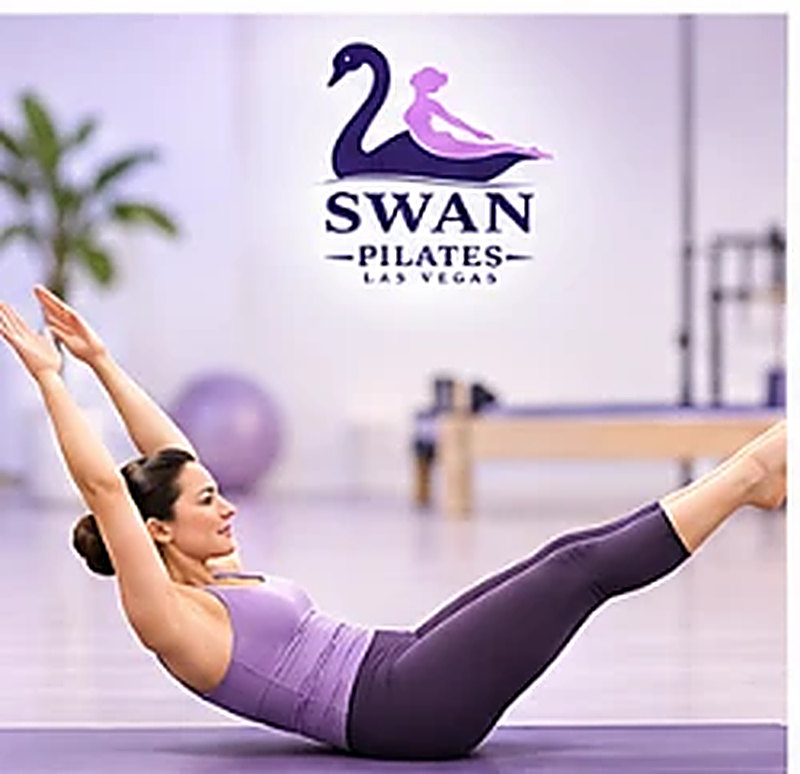
What it is. The progression from the single leg version, with both legs working at once and the arms added to the load.
How to perform it. From the same curled position, draw both knees in and hold the ankles. Inhale and extend the arms overhead while the legs reach forward, opening the body into a long line. Exhale, circle the arms out and around, and draw the knees back in. The upper body stays lifted throughout and the lower back stays down.
Benefits. Abdominal strength through a long lever, shoulder mobility, and coordination of the whole body in one breath.
Common mistakes. The back arching as the limbs extend, which is the whole difficulty of the exercise. Shortening the reach to make it easier without noticing. Losing the chest lift at the moment of extension.
Beginner modifications. Extend only the arms, or only the legs, rather than both. Keep the legs higher. Reduce the repetitions well before the form goes.
Difficulty. Intermediate.
Why one to one helps. There are four separate ways to make this easier, and choosing the right one for your body is the difference between progress and a sore back.
7. Spine Stretch Forward
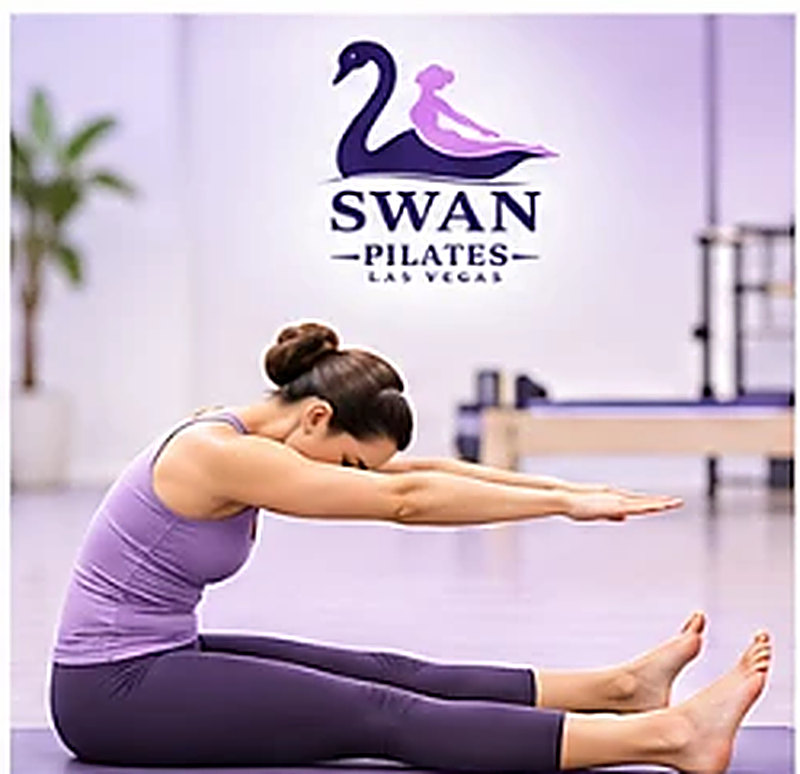
What it is. A seated forward rounding that looks like a stretch and is actually an exercise in controlled articulation.
How to perform it. Sit tall with the legs extended and opened to about mat width, feet flexed, arms reaching forward. Inhale and grow taller through the spine. Exhale and round forward from the top of the head down, drawing the abdominals back as the spine curves over the legs. Inhale and restack the spine to sitting, segment by segment.
Benefits. Spinal flexion under control, hamstring and back length, and a direct lesson in sitting tall that transfers to a desk.
Common mistakes. Collapsing forward from the hips instead of rounding through the spine. Pushing for depth rather than for sequence. Starting from a slumped sit, which removes the point.
Beginner modifications. Sit on a folded towel or cushion to tilt the pelvis forward, or bend the knees. Many people cannot sit upright on the floor with straight legs, which is information rather than a problem.
Difficulty. Beginner.
Why one to one helps. If you cannot find a tall seated position, the exercise cannot work, and the fix depends on why. Tight hamstrings, a stiff pelvis and a flat lower back all need different answers.
8. The Saw
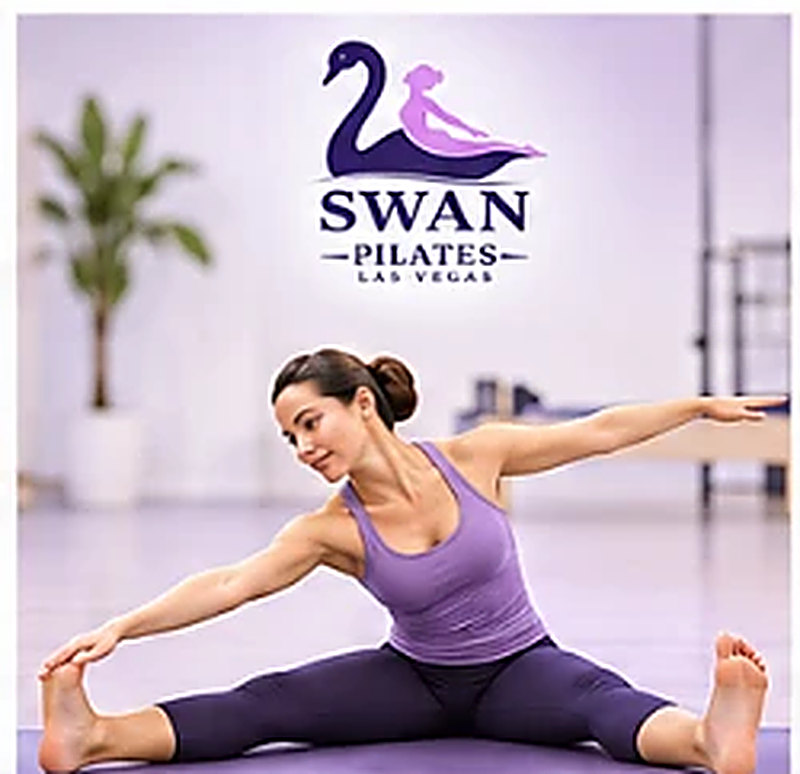
What it is. Rotation combined with flexion, and one of the few mat exercises that trains the spine to twist and bend at the same time.
How to perform it. Sit tall with the legs open and the arms extended out to the sides. Inhale and rotate the torso to one side, keeping both hips planted. Exhale and reach the back-side hand toward the opposite little toe while the other arm reaches behind you, as though sawing off the last of your breath. Inhale to roll up and untwist. Three to five times each side.
Benefits. Rotational mobility of the thoracic spine, waist and oblique work, and a genuinely effective exhale.
Common mistakes. Letting one hip lift so the twist comes from the pelvis rather than the spine. Bending forward before rotating. Forcing the reach past available range.
Beginner modifications. Sit on a cushion, bend the knees, or reduce both the twist and the reach. The rotation matters more than the distance travelled.
Difficulty. Intermediate.
Why one to one helps. Rotation is the movement most people have least of and notice least, which makes it the one where a trained eye is worth the most.
9. Swan Dive
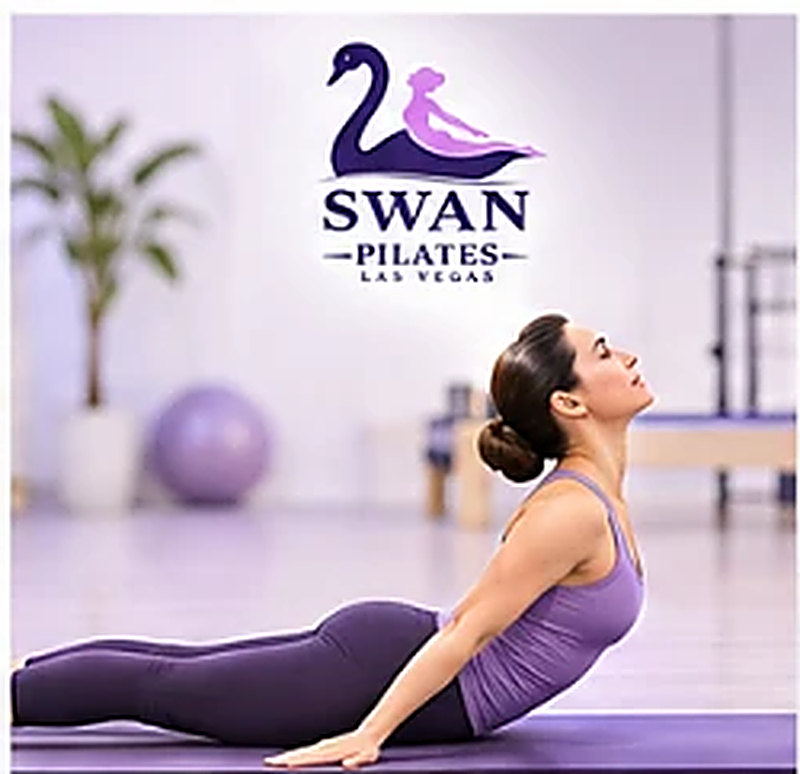
What it is. The repertoire’s main back extension exercise. Worth being precise here, because two different things share the name: the Swan is the controlled press into extension, and the Swan Dive is the advanced rocking version that follows it.
How to perform it. Lie face down, hands under the shoulders, legs together and long. Inhale and press the chest forward and up into a long even curve, lengthening rather than cranking, with the back of the neck long and the legs active. Exhale and lower with the same control. Only once that is reliable does the full Swan Dive follow: arms reach forward, the hands leave the mat, and the body rocks between chest and legs like a seesaw.
Benefits. Back extensor strength, shoulder and chest opening, and a direct counter to the rounded shape that sitting builds.
Common mistakes. Hinging sharply at the lower back instead of distributing the curve. Pushing with the arms rather than lifting with the back. Attempting the rocking version before the extension itself is solid.
Beginner modifications. Stay with a small Swan, keep the hands under the shoulders, or practise the shape over a barrel so the apparatus supports the curve. Anyone with a diagnosed back condition should have extension work assessed before starting.
Difficulty. The Swan is beginner to intermediate. The full Swan Dive is advanced.
Why one to one helps. This is the clearest example of an exercise where the modified and the full version are not the same exercise at all, and where attempting the wrong one is the problem. Knowing when you are ready is a judgement someone has to make while watching you.
10. The Teaser
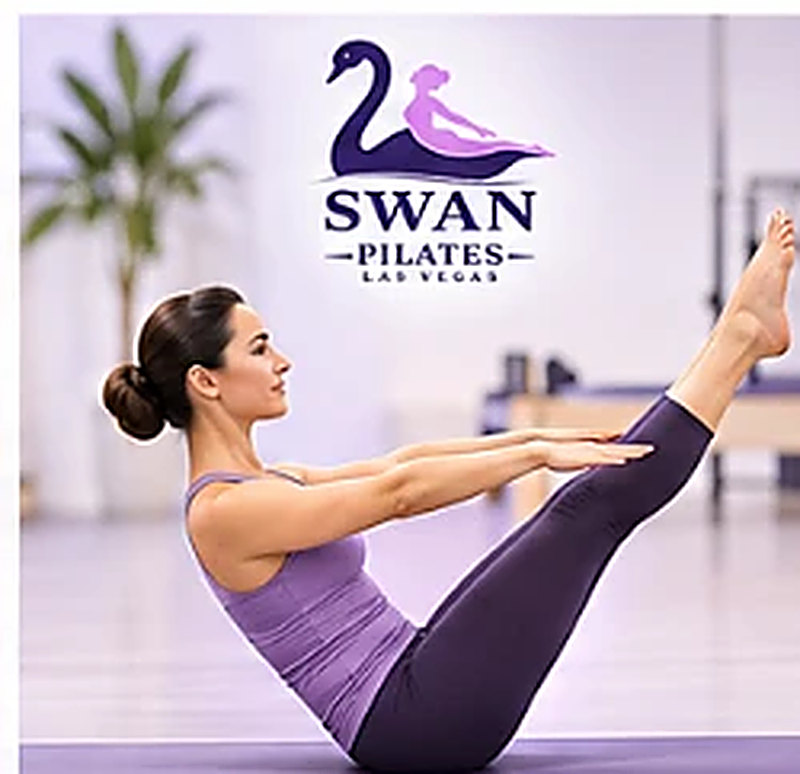
What it is. The exercise people recognise and most teachers use as a progress marker. A balanced V shape held on the sitting bones with the legs extended.
How to perform it. From lying, with the legs extended at an angle and together, roll up through the spine to balance just behind the sitting bones, arms reaching parallel to the legs, the body forming a long open V. Exhale to come up, inhale to hold, exhale to lower with the same articulation you used to arrive. The legs stay still throughout.
Benefits. Integrated strength through the whole centre, hip flexor and back extensor coordination, balance, and the ability to control a position rather than just reach it.
Common mistakes. Swinging the legs or arms to get there. Collapsing at the lower back so the shape rounds instead of lengthening. Holding the breath, which is a reliable sign the exercise is currently too hard.
Beginner modifications. Bend the knees, hold behind the thighs, keep the feet on the mat, or work with the legs supported on a wall. The Teaser is usually built over months from the exercises above it rather than attempted directly.
Difficulty. Advanced in its full form.
Why one to one helps. The Teaser is the clearest case for the classical order. It is not a goal to chase; it is what the earlier exercises assemble. A private programme can build the pieces in sequence instead of letting you practise a shape you are not ready for.
Classical mat work versus the Reformer and Cadillac
Every exercise above is performed with nothing but your own body and gravity. That is the mat’s virtue and its limit. It tells you the truth, because there is no spring to borrow from and no frame to hold, and it offers almost nothing in return when the truth is that you cannot yet do the movement.
This is where the apparatus earns its place, and the reason is not the one most people assume. Springs resist, which everybody knows. Springs also assist, which almost nobody mentions. On the Reformer the carriage and straps can carry part of your weight so a movement you cannot produce alone becomes possible, and you still get stronger from performing it. The Cadillac adds a frame to hold and springs anchored above you, which is why standing and extension work can be introduced there long before it would be safe on a mat.
Neither format is better in the abstract. They do different jobs, and the classical system was designed to use both: the apparatus to build capacity and give feedback, the mat to find out what you actually own. Rachel teaches mat work and the full apparatus for exactly that reason.
Why private classical instruction matters
Read back through the ten exercises and notice what the mistakes have in common. Almost none of them feel wrong while you are making them. The pelvis rocking in Single Leg Stretch, the lower back hinging in the Swan, the momentum in the Roll Up: these produce a movement that looks approximately right and trains approximately nothing. You cannot feel the difference until someone shows you, and then you cannot unfeel it.
That is the case for individual instruction, and it is strongest for the people most likely to be reading this. Beginners, who have no reference for what the exercise should feel like. Older adults, where the gap between two people of the same age is enormous. Anyone returning after a long gap, an injury or a surgery, where the right first month looks nothing like a general class. And anyone who wants to learn the method rather than complete a workout.
Rachel worked as a physiotherapist in Israel for more than ten years before training in the classical Pilates method, and that background is the reason she starts with how a person moves rather than with a list of exercises. What she teaches in the studio is Pilates, not physiotherapy. A good group class serves plenty of people well; the comparison is set out honestly in private versus group Pilates. What a private hour adds is that every variable moves for you: the exercise, the spring, the range, the speed, the position, and when to progress.
Frequently asked questions
Is classical Pilates suitable for beginners?
Yes, and the fixed order is part of why. The sequence starts with the exercises that build what the later ones need, so a beginner is not choosing between easy and useful work. Every exercise also has modifications, and a beginner spends the first weeks on versions chosen for their body rather than on the full repertoire.
What is the difference between classical Pilates and regular Pilates?
Classical Pilates teaches the system Joseph Pilates left behind: the same exercises, in the same order, on the apparatus he designed. Contemporary styles use the same vocabulary but rearrange the order and often blend in other methods. Both can be taught well. The classical difference is that the order is treated as part of the method rather than as a suggestion.
How often should beginners practise Pilates?
One or two supervised sessions a week is a realistic start, and consistency matters more than frequency at the beginning. Joseph Pilates himself advocated near-daily practice, though that assumed a repertoire you already knew well. A short home practice between sessions is usually more valuable than a third session.
Can older adults practise classical Pilates?
Yes, and it suits them unusually well. The apparatus allows load to be adjusted in small increments and lets much of the work happen lying down or seated, so meaningful strength work does not require getting onto the floor. What needs checking first is not age but recent surgery, an unmanaged condition or a significant balance problem, and that check belongs with a physician.
Is private Pilates better than group Pilates?
For learning the method, working around a physical history, or changing a specific movement pattern, individual instruction does things a class cannot. For an experienced practitioner who mainly wants a regular workout and enjoys exercising with other people, a well-run class is a good choice. They are different products rather than better and worse.
Do I need to be flexible to start Pilates?
No. Flexibility is one of the things the work develops, and every exercise can be scaled to the range you have today. Several of the exercises above have modifications specifically for people who cannot yet sit upright on the floor with straight legs, which is extremely common.
Try classical Pilates in Las Vegas
Reading about these ten exercises is useful. Feeling the difference between performing one correctly and approximately is a different thing entirely, and it takes about ten minutes with someone watching.
Swan Pilates is a private, one-on-one classical studio on West Sahara Avenue, a short drive from Summerlin and Sun City Summerlin, open seven days a week. Every session is taught individually on the full classical apparatus, with no group classes and nobody waiting for your machine.
Your first private session is free, with no conditions attached. A full hour, one instructor and one client, built around what your body is actually doing. Call 702-848-4767 or send a message and tell Rachel what made you start looking.
Pilates instruction is not medical care. If you have a recent injury, a recent surgery, unexplained symptoms or a condition your physician is managing, get cleared before starting any new exercise programme.